


There is a word that appears almost 500 times in the Old Testament and that most Christians have never heard pronounced in Hebrew. It does not mean "crime," it does not mean "transgression," and it does not mean "deliberate disobedience." It means, literally, to miss the mark.
That word is chet (חֵטְא), the most common Hebrew root for what we translate as "sin." And when you understand what it truly means, the entire Bible takes on a new dimension. God ceases to look like a furious legislator waiting for the next infraction and becomes what the Scriptures actually reveal: a Creator who looks upon humanity like an archer who has lost his aim and says, with mercy, "let me show you the target again."
This article explores what the original Hebrew language says about sin, why modern translations capture only a part of the meaning, and why this matters for every person who reads the Bible today.

The Translation that Impoverishes the Text
How an archer's word became a synonym for moral evil.
When we open any Bible in English and read "you have sinned," the word that comes to mind carries centuries of legal and religious connotation: guilt, punishment, condemnation. This idea comes in part from the Latin peccatum, which Jerome's Vulgate used to translate both the biblical Hebrew and the biblical Greek. Latin, in turn, migrated into the modern Western languages carrying a weight of legal formality that did not exist in the original languages of the Scriptures.
In biblical Hebrew, the semantic universe of sin is much richer, much more precise and, in a certain sense, much more human. The Hebrew language does not have a single, omnipresent word for "sin." It has at least four distinct terms, each describing a different category of wrongdoing, with different intensities, different intentions and different relationships with God. Each time a biblical author chose one of these terms, he was making a precise theological statement that no translation can fully capture in a single word.
Understanding these distinctions is not an academic exercise. It is the difference between a faith based on fear of punishment and a faith based on understanding what turning away from God really means.
Chet: The Archer Who Missed the Bull's-Eye
The most common word for sin in the Old Testament comes straight from the battlefield.
The Hebrew root ח-ט-א (chet-tet-alef) appears for the first time in a completely non-religious way. In Judges 20:16, we read about the elite warriors of the tribe of Benjamin: "Among all these were seven hundred chosen men who were left-handed; every one could sling a stone at a hair and not yachti."
The word translated as "miss" is exactly the same root as chet, the principal Hebrew term for sin. The warriors of Benjamin were so skilled that they never "sinned." They never missed the mark. The connection is not accidental; it lies at the heart of what the Hebrew language means to communicate.
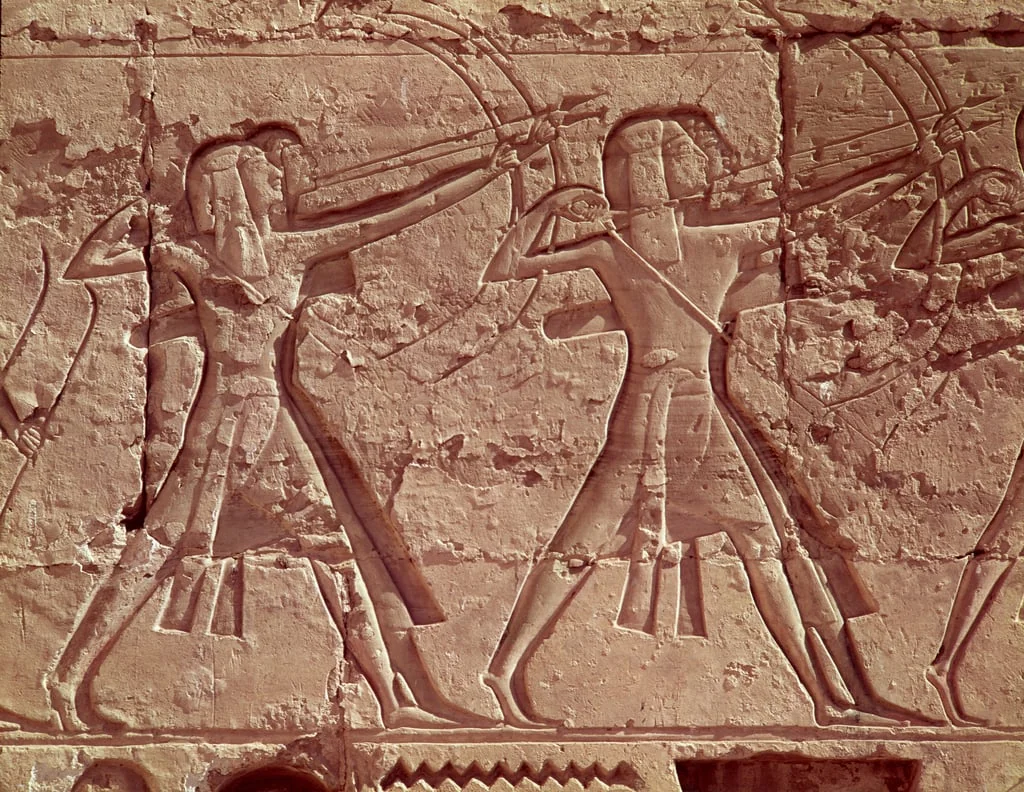
For an Israelite of the tenth century B.C., to hear that "you have committed chet" did not evoke a divine courtroom. It evoked an immediate and concrete image: a trained archer, a defined target, and an arrow that flew too far to the left. Not necessarily out of ill intent. Not necessarily out of rebellion. The archer may have trembled. He may have been distracted by the wind. He may simply have had a bad day. The result is the same: the arrow did not reach where it was meant to reach.
It is in this sense that the Hebrew Bible uses chata (חָטָא) in its nearly 500 occurrences. In Genesis 31:36, Jacob furiously asks Laban: "What is my offense? What chet have I committed that you have hotly pursued me?" The word carries the sense of a fault, a mistake, a failure to fulfill an obligation, without necessarily implying criminal intent.
In Leviticus 4, the entire section on sin offerings uses the word chattaat (חַטָּאת), derived from the same root, to describe the sins the people had committed unknowingly, through forgetfulness or distraction. The Law of Moses explicitly recognized that a great part of human sin is not deliberate. It is the archer who missed, not the murderer who shot on purpose.
What Was the Target?
To understand what it means to miss, one must first know what was meant to be hit.
If sin is missing the mark, the question that follows is inevitable: what was the target that Israel was meant to hit? The answer lies at the heart of the Sinai covenant.
The target was not an abstract set of rules. It was a relationship. When God spoke to Moses at Sinai and established the Torah, the entire framing was relational: "I am the LORD your God, who brought you out of the land of Egypt, out of the house of slavery" (Exodus 20:2). Before any commandment, there was an identity and a shared history. The people who received the laws had already been rescued. Obedience was not a condition for salvation; it was the natural response of a people who had been saved.
The target, then, was to live according to what God had revealed to be good: to love God with all the heart, all the soul and all the strength (Deuteronomy 6:5), and to love one's neighbor as oneself (Leviticus 19:18). When an Israelite "missed the mark," he was turning away from that relational center. Not merely violating a law, but stepping off the trajectory that would lead to the full life God had designed for him.
This distinction is crucial. Sin as "missing the mark" places the focus not on punishment, but on the distance created between the creature and the Creator. It is a language of positioning, not of criminal judgment.
The Four Hebrew Words for Sin
Hebrew distinguishes with surgical precision what English condenses into a single word.
There is no "sin" in the singular in biblical Hebrew. There is a spectrum, and each point on that spectrum has its own name. Knowing these four words is like gaining a zoom lens onto the biblical text.
1. Chet (חֵטְא): Missing Without Intention
As we have seen, chet is the broadest and most frequent category. It describes sin as failure, as an involuntary or semi-involuntary deviation. Leviticus uses this term extensively to cover sins committed "by mistake" or "unintentionally" (Leviticus 4:2, 4:27). The chattaat sin offering existed specifically for this kind of failure.
The theological implication is profound: God anticipated that His people would miss the mark unintentionally. The entire architecture of the sacrificial system was built with this reality in mind. The Creator knew the limitation of the creature and provided a means of restoration even before the error was committed.
2. Avon (עָוֹן): The Inner Twisting
Avon (iniquity) is an intensification. While chet can describe an unintentional error, avon points to something internal: a distortion, a bending of the heart that leads to wrong action. The term itself in Hebrew carries the idea of "something crooked," a deviation that proceeds from the inside out.
In Isaiah 53:5, one of the most important messianic texts of the Hebrew Bible, we read: "He was pierced for our transgressions, crushed for our avonot." The prophet uses avon to describe not only the errors committed, but the inner inclination that produced them. It is the deepest level of the human problem: not merely the arrow that missed, but the bow that is crooked.
In Psalm 51, King David uses avon to acknowledge this aspect of his situation after the affair with Bathsheba: "Wash me thoroughly from my iniquity (avon)" (Psalm 51:2). David knew it was not merely an isolated act. There was an inner bending that needed to be made straight.
3. Pesha (פֶּשַׁע): Conscious Rebellion
Pesha is the gravest of the terms. If chet is to miss by mistake and avon is to act out of a distorted inclination, pesha is to cross the line deliberately, knowing it exists and not caring. The term is frequently translated as "transgression" or "rebellion" and carries the idea of someone who not only misses the mark, but deliberately aims the arrow in the opposite direction.
In Proverbs 28:13, we read: "Whoever conceals his transgressions (pesha) will not prosper, but he who confesses and forsakes them will obtain mercy." The context makes it clear that pesha is a sin one knows to be sin. It is the conscious rejection of divine sovereignty.
The prophet Amos uses pesha repeatedly to denounce the nations surrounding Israel (Amos 1:3, 1:6, 1:9), describing not errors of aim, but deliberate atrocities, calculated cruelties, the systematic rejection of any transcendent moral reference.
4. Aveirá (עֲבֵירָה): Crossing the Boundary
Aveirá is the fourth relevant term, less frequent in the canonical texts but widely used in the rabbinic tradition. It literally means "passage" or "crossing," the idea of crossing a boundary one knew to be there. It combines intentionality with the recognition that God's sovereignty still exists. The sinner of aveirá does not deny that there is a law; he crosses it anyway.
This distinction among the four categories has immense practical implications. When Psalm 32:1 says "Blessed is the one whose transgression is forgiven, whose sin is covered" and uses two different terms, it is not simply being poetic. It is being theologically precise: both the unintentional error and the conscious rebellion can be covered by divine mercy.
Greek Also Says: Miss the Mark
When the apostles wrote in Greek, they chose exactly the same metaphor.
The New Testament was written in Koine Greek, the popular Greek of the first century. To translate the Hebrew concept of chet, the authors of the New Testament mainly used the word hamartia (ἁμαρτία). And the etymology of this word reveals a remarkable convergence with the Hebrew.
Hamartia derives from the verb hamartano, which in classical Greek was a term from the world of sports and war. An archer who missed the target, an athlete who failed to reach the mark, a soldier who failed to hit the vital point: all of them hamartia. Exactly like the warrior of Benjamin in Judges 20:16.
The word hamartia appears 221 times in the New Testament. In Romans 3:23, Paul uses this word for his most categorical statement about the human condition: "for all have sinned and fall short of the glory of God." In Greek: pantes gar hemarton kai husterountai tes doxes tou theou. Literally: "For all missed the mark and fall short of the glory of God."
The "glory of God" (doxa tou theou) is, in this context, the target. The destiny for which the human being was created is full communion with the Creator, participation in His own glory, as Genesis 1:26-27 describes. Sin is not merely violating a law; it is falling short of that original calling.
Psalm 51: When David Uses the Three Terms on Purpose
The most famous psalm about repentance is also a masterclass in Hebrew linguistics.
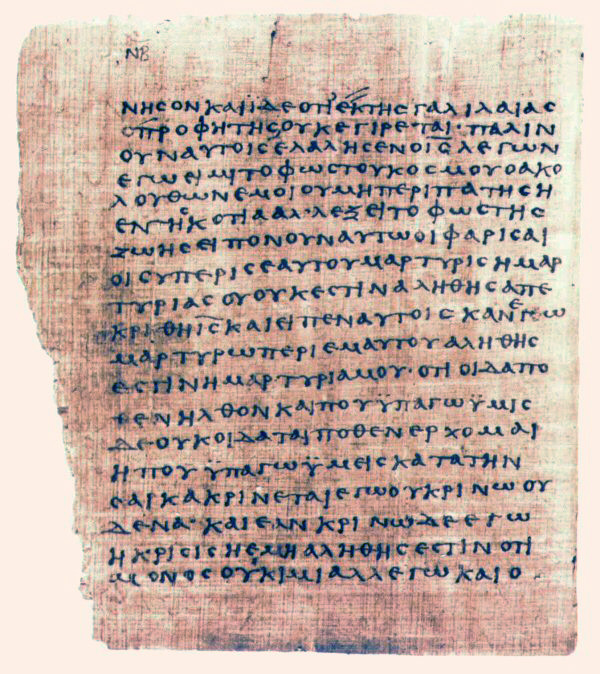
Psalm 51 is the record of King David's repentance after the scandal with Bathsheba and the death of Uriah. It is one of the most studied texts in the Bible, but most English readers miss an essential layer: David deliberately uses the three great Hebrew terms for sin in its first two verses, and each choice is precise.
Psalm 51:1-2 in a literal translation from the Hebrew:
"Have mercy on me, O God, according to your steadfast love; according to your abundant mercy blot out my transgressions (pesha). Wash me thoroughly from my iniquity (avon), and cleanse me from my sin (chet)."
David is not simply being emphatic by using three words for the same thing. He is making a theological confession in three dimensions:
By saying pesha, he acknowledges deliberate rebellion: he knew Uriah was a faithful man; he planned the death on purpose. By saying avon, he acknowledges the inner bending: there was a distorted inclination, a misdirected desire that Psalm 51:5-6 explores ("In iniquity I was formed"). By saying chet, he acknowledges the full magnitude of the turning away: the distance created between him and God, the target that had been completely missed.
The response David asks for is also threefold: "blot out" (pesha), "wash" (avon), "cleanse" (chet). Each request is calibrated to the specific kind of evil acknowledged. This is the Bible operating with a precision that the translated text can rarely convey.
Teshuvah: God's Response Is Not Punishment, It Is a Call to Return
When sin is understood as distance, repentance takes on a completely different meaning.
If sin is missing the mark, turning away from the center, creating distance, then God's response to that situation cannot be simply punishment. Punishment does not correct one's aim. What corrects the aim is returning to the original position and shooting again.
That is exactly what the Hebrew word for repentance says. Teshuvah (תְּשׁוּבָה) derives from the root shuv (שׁוּב), which means "to return," "to turn around," "to go back to the starting point." In modern Hebrew, teshuvah simply means "answer" or "solution to a problem." And this double meaning is not accidental: the return to God is the answer, the solution to the problem of the distance created by sin.
The difference between teshuvah and the Western concept of "repentance" is revealing. Repentance in the Western sense is essentially retrospective: it looks to the past, feels guilt, asks for forgiveness. Hebrew teshuvah is fundamentally directional: it is the turning of the body, the redirecting of all future steps toward God. The gaze is not on the error committed, but on the path one is now resuming.
The prophets of the Old Testament use this language constantly. "Return (shuvu) to me, and I will return to you" (Zechariah 1:3). "Return (shuvu), O faithless children" (Jeremiah 3:14). The divine call is not "repent in the sense of being ashamed." It is "change direction, return to the target, come back to the center."
In the New Testament, the Greek metanoia (μετάνοια), often translated as "repentance," carries a similar idea: meta (change) + noia (mind, perspective). It is not a feeling of sadness; it is a radical change of mental orientation. When John the Baptist and Jesus preached "repent" (metanoeite), the call was for a complete reorientation of life, not for a session of lamentation.
Why This Changes Everything
A theology of sin built on the original Hebrew produces a radically different faith.
When sin is understood only as "the transgression of a divine law," the relationship with God inevitably takes on a legal coloring. God becomes the Judge, the human being becomes the defendant, and faith is reduced to a constant effort not to break the rules in order to avoid condemnation. This structure produces a spirituality based on fear, on chronic guilt, on religious performance.
When sin is understood as "missing the mark," "turning away from the relational center," "creating distance from the Creator," the picture changes completely. God becomes the point of origin and the destination, not the Judge. The human being becomes an archer in training, not a criminal on trial. And faith becomes a process of progressively adjusting one's aim, of constant realignment with the target, driven not by fear of punishment but by the desire to hit what one was designed to hit.
This shift of perspective appears clearly when we read the narrative of Adam in Genesis 3 with Hebrew eyes. When God asks "Where are you?" (Genesis 3:9), it is not a geographical question. It is the Creator acknowledging the distance created and calling the human being back to the center. The first divine response to the first chet in history was not a courtroom sentence; it was a call to return.
The same logic explains why God speaks to Cain before the murder of Abel: "If you do well, will you not be accepted? And if you do not do well, sin (chet) is crouching at the door. Its desire is for you, but you must rule over it" (Genesis 4:7). Sin is described as something that wants to dominate Cain, a force that pulls him away from the target. And God warns him before the error, He does not condemn him after. The divine pattern is preventive, not punitive.
The Meaning that Kadosh Reveals
Holiness is not the opposite of sin in the moral sense, but the opposite of distance.
There is one final linguistic point that completes this picture. If sin is distance, turning away, deviation from the target, then the holiness of God, kadosh (קָדוֹשׁ), which means "set apart," "distinct," "wholly other," takes on a new meaning when applied to the human being called to be holy.
In Leviticus 11:44, God says: "Be holy (kedoshim), for I am holy." The people are called not to an abstract moral perfection, but to a distinction, a differentiation, an alignment with the character of God Himself. To be holy is not to never miss; it is to keep one's face turned toward the target even when the arrow does not hit. It is the direction that defines the kadosh, not the perfection of the result.
Paul captures this idea in Philippians 3:12-14, when he says: "Not that I have already obtained this or am already perfect, but I press on to make it my own, because Christ Jesus has made me his own... I press on toward the goal for the prize of the upward call of God in Christ Jesus." The apostle's idiom is, once again, the idiom of the archer: there is a target, there is a pressing on, there is a trajectory. Faith is not the trophy handed to the one who never missed; it is the arrow that remains pointed at the center.
Conclusion
The most common Hebrew word for sin in the Old Testament is the same one used to describe the elite warriors of Benjamin who never missed the mark. This is not an etymological coincidence. It is a window into the way the inspired authors of the Scriptures understood the human condition: not as a multitude of criminals before an angry judge, but as a humanity of archers who lost their aim for what they were created to hit.
Hebrew distinguishes between the unintentional error (chet), the inner distortion (avon), the conscious rebellion (pesha) and the deliberate transgression (aveirá), because God distinguishes. The divine response to all these categories, however, converges in a single invitation expressed by the word teshuvah: return. Change direction. Come back to the target.
This is the grammar of the gospel that was already written on the pages of the Old Testament, long before any Latin or English translation. And it reveals a God who, before being the Judge, is the Master Archer who reaches out to adjust the disciple's stance and says: "Now shoot again."
To delve deeper into the biblical characters who lived out this path back to the target, explore the complete profiles on the Heroes of the Bible portal and discover how the Hebrew language transforms the reading of every story.
Notes and References
- Brown, F.; Driver, S. R.; Briggs, C. A. Hebrew and English Lexicon of the Old Testament. Oxford: Clarendon Press, 1907. Entry חטא, pp. 306–308.
- Botterweck, G. J.; Ringgren, H. (eds.). Theological Dictionary of the Old Testament (TDOT). Vol. 4. Grand Rapids: Eerdmans, 1980. Entry "חטא", pp. 309–319.
- Koehler, L.; Baumgartner, W. The Hebrew and Aramaic Lexicon of the Old Testament (HALOT). Leiden: Brill, 2001. Entry חטא, p. 305.
- Judges 20:16 (English Standard Version). Reference to the non-religious use of the root חטא.
- Oswalt, J. N. "Sin, Guilt." In: New International Dictionary of Old Testament Theology and Exegesis (NIDOTTE), vol. 2. Grand Rapids: Zondervan, 1997. pp. 87–93.
- Vine, W. E.; Unger, M. F.; White, W. Jr. Vine's Complete Expository Dictionary of Old and New Testament Words. Nashville: Thomas Nelson, 1996. Entries "sin" (Hebrew and Greek).
- Kittel, G. (ed.). Theological Dictionary of the New Testament (TDNT). Vol. 1. Grand Rapids: Eerdmans, 1964. Entry "ἁμαρτία", pp. 267–316.
- Heschel, A. J. God in Search of Man: A Philosophy of Judaism. New York: Farrar, Straus and Giroux, 1955. Chapter on teshuvah.
- Psalm 51:1-2; Exodus 20:2; Genesis 4:7; Romans 3:23; Philippians 3:12-14. All citations follow the English Standard Version (ESV).
Perguntas Frequentes


Continue studying Current Events
Discover the Secrets of the Bible