


For centuries, Jewish identity has been closely associated with the observance of Torah laws. But when exactly did ancient Jews begin to systematically follow these religious prescriptions? The answer, as revealed by a detailed analysis of archaeological and textual evidence, is later than previously imagined: only around the second century BCE, a period known as the Hasmonean era.
This conclusion challenges a fundamental premise of traditional biblical scholarship. Archaeologist Yonatan Adler, from Bar-Ilan University, presented this thesis in his recent work published in Biblical Archaeology Review (winter 2022 edition), titled "The Genesis of Judaism". According to Adler, not even during the First Temple (tenth century BCE to 586 BCE) did ancient Israelites follow Torah laws in a widespread manner. And surprisingly, not even during the Babylonian Exile (sixth century BCE), the period when many scholars date the final composition of the Torah.
What the Bible Reveals About Ancient Religious Observance
A curious detail emerges from the biblical texts themselves: the narratives of the First Temple never mention that Israelites observed the fundamental dietary laws of Judaism. No passage states that they avoided pork or shrimp, that they kept the Sabbath, or that they refrained from wearing mixtures of linen and wool. Similarly, there are no records of their using tefilin (phylacteries) on their arms and head, mezuzah (capsule with inscriptions) on the doorposts, or fringes on their garments—practices that later defined Jewish identity.
This paradox led Adler to a crucial question: when exactly did ancient Jews, as a society, begin to observe Torah laws in their daily lives? To answer it, the researcher adopted an innovative method: tracing archaeological vestiges of specific Jewish religious practices, beginning with the first century CE (when evidence is abundant) and working backward in time to the point where material traces disappear.
Ritual Pools and Levitical Purity: The Decisive Archaeological Marker
One of the most significant findings concerns mikvot—ritual pools used for purification according to Torah purity laws (described mainly in Leviticus and Numbers). These structures, identifiable by specific architectural features such as steps and water supply systems, proliferate in Judea from the late second century BCE onward and become abundant in the first century BCE and first century CE.
The pattern is clear: there are dozens of mikvot at Jewish sites from the Herodian period (first century BCE–first century CE), including the fortress of Masada. As we move back to the third century BCE, the number drops dramatically. And when we reach periods before the second century BCE, they practically disappear. This material absence is eloquent: if Levitical purity laws were observed widely before that time, we would expect to find mikvot in similar proportions.
Beyond pools, Adler examined secondary artifacts associated with ritual purity. Chalk vessels also emerge as reliable indicators. In ancient Judaism, it was believed that calcite—unlike ceramic—did not contract ritual impurity. These vessels, therefore, reflect the literal acceptance of purity laws. Again, their distribution concentrates in the late period—second to first century BCE onward—and is practically nonexistent in earlier periods.
The Problem of Carved Images: Numismatic Evidence
Another fundamental Torah law prohibits the creation of carved images of living beings (Deuteronomy 5:8). However, during the Persian period (sixth to fourth centuries BCE), the Jewish priests themselves issued coins bearing representations of human faces and animals. A silver coin of the governor Hezekiah, dated to approximately 350 BCE, displays on the obverse a crude human portrait, and on the reverse an owl standing. The Hebrew inscription identifies him as "Hezekiah, the governor" of the Persian province of Yehud (Judea).

This use of images by Jewish religious authorities during the Persian era demonstrates that the law against carved images was not yet observed or understood as mandatory. The transformation occurs only centuries later. The Hasmonean coins of the late second century BCE, such as those of John Hyrcanus I (Hasmonean priest-king), completely eliminate human and animal figures, replacing them with decorative symbols (cornucopias, pomegranates) and text in archaic Hebrew script. This visual change marks an inflection point: the widespread and conscious acceptance of the prohibition on images.

Documents from the Jewish Exile in Egypt: Textual Testimony
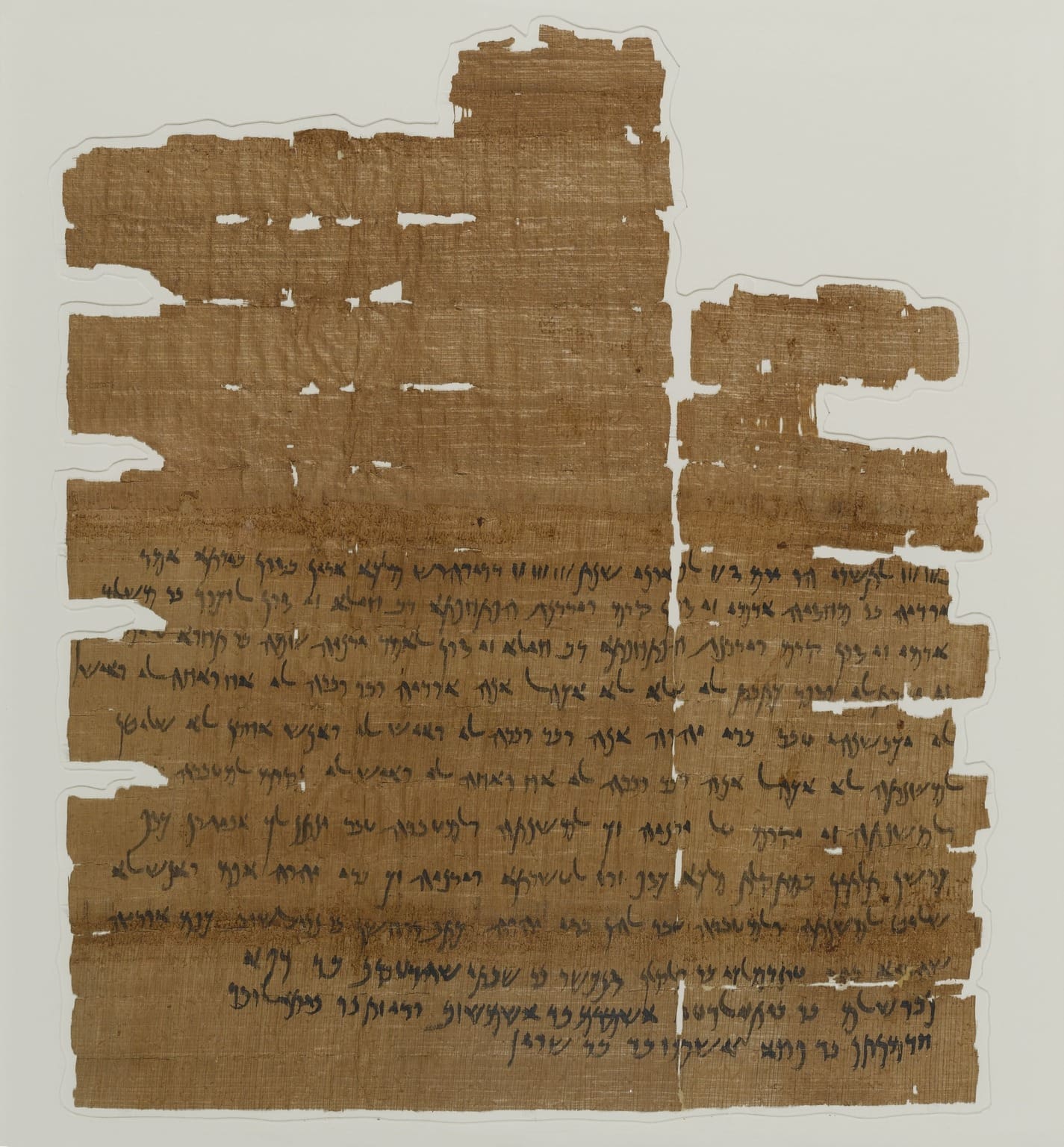
Beyond archaeological evidence, texts discovered in the Jewish community of Elephantine (an island in the Nile, southern Egypt) provide fascinating clues about religious practices in the fifth century BCE. These Aramaic documents—contracts, letters, receipts—reveal that the Jews of Elephantine did not celebrate Passover on a fixed date, were unfamiliar with the seven-day division of the week or Sabbath prohibitions, and occasionally directed prayers to deities other than Yahweh. A letter from 416 BCE mentions the celebration of Passover on different dates among Jewish groups, suggesting that the festival did not yet have the centralized significance it would later acquire.
These fifth-century records, closest to the period of the Babylonian Exile, contradict the idea that the Torah, if already composed at that time, was observed as binding law. The Jews of Elephantine, even far from Judea, did not reflect the religious behavior that the Torah prescribed.
The Emergence of Normative Judaism in the Second Century BCE
Consolidating these data—ritual pools, chalk vessels, coins without images, and textual documents—Adler places the inflection point for the emergence of a systematic and observant Judaism around the middle of the second century BCE. This period coincides with the Maccabean Revolt (167–160 BCE) and the subsequent establishment of the Hasmonean dynasty (141 BCE onward). The political, religious, and cultural transformation was dramatic: the Hasmoneans not only reconquered Judean independence from Seleucid rule but also implemented—or consolidated—a program of religious observance that redefined Jewish identity.
The irony is that this systematically observed "Judaism" emerged many centuries after the composition of the Torah (dated by modern textual criticism between the sixth and fourth centuries BCE). The text may have existed and been known to scribes and priests, but its authority as binding law for the entire Jewish population did not materialize in widespread practices until the Hasmonean era.
New Perspectives on Identity and Religious Authority
This discovery reorients the understanding of how religions become established. Judaism did not emerge suddenly with the completion of the Torah, nor even during the traumatic Babylonian Exile. Instead, it was a gradual process of institutionalization and acceptance of religious norms that accelerated significantly under leadership such as the Hasmoneans, who used legal observance as a marker of identity and cultural resistance against Hellenization.
Archaeological data not only rewrite the chronology of the origins of Judaism but also illuminate broader questions: how do sacred texts gain authority? How do religious practices spread in societies? And how do political changes catalyze cultural and spiritual transformations? The answer, as excavations and artifacts suggest, is that religions exist in overlapping historical layers—ancient texts may coexist with modern practices, and the true "origin" of a tradition often resides not in its founding text, but in the moment when its prescriptions begin to be widely observed and internalized by society.
Notes and References
- Yonatan Adler, archaeologist at Bar-Ilan University, author of the article "The Genesis of Judaism" published in Biblical Archaeology Review, vol. 48, no. 1 (winter 2022).
- Archaeological site of Masada, Herodian fortress in the Judean Desert, with multiple mikvot from the first century BCE.
- Community of Elephantine, island in the Nile (Egypt), with Aramaic documents from the fifth century BCE that attest to pre-Hasmonean Jewish practices.
- Hasmonean period (c. 141–37 BCE) and Herodian era (37 BCE–70 CE), marked by the proliferation of evidence of Torah observance.
- Analysis technique: retroactive tracing of material vestiges (ritual pools, chalk vessels, numismatics, epigraphy) to determine the chronology of adoption of religious practices.
- Original source: Biblical Archaeology Society
Perguntas Frequentes


Continue studying Current Events
Discover the Secrets of the Bible